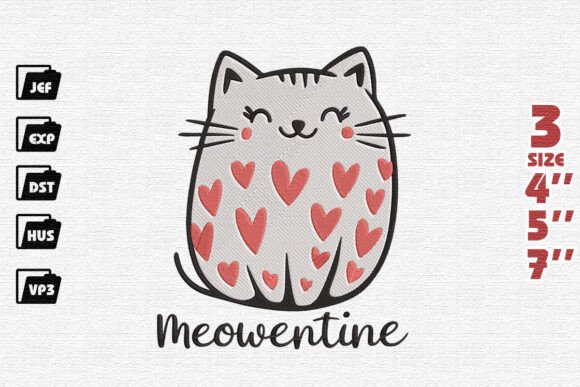
Review: Sweet Cat Valentine Embroidery for Real Projects
As a designer who has spent countless hours staring at digitized files and troubleshooting tension issues, I approach every new machine embroidery design with a mix of curiosity and skepticism. We have all seen designs that look perfect on a screen but turn into a tangled mess of thread breaks and puckering on fabric. Recently, I pulled up the Sweet Cat Valentine Embroidery file to evaluate its potential for upcoming client work and personal shop inventory. This is not just a cute graphic; it is a practical asset that requires careful consideration before hitting the start button on your machine.
First Impressions and Visual Personality
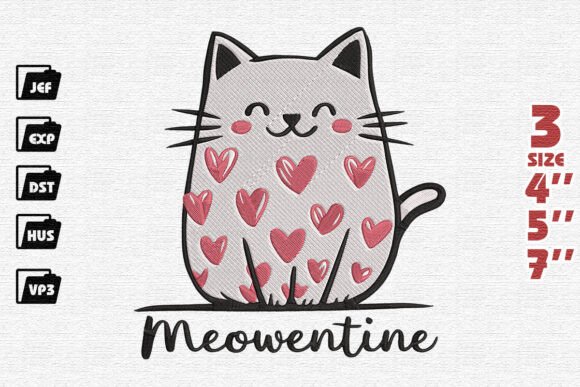
The initial view of the Sweet Cat Valentine Embroidery design immediately sets a warm, playful tone. The central figure is a charming kitty, rendered with clean lines that suggest a balance between detail and stitchability. Surrounding the cat are hearts and the text "Meowentine," which adds a whimsical pun to the traditional Valentine S Day theme. From a layout perspective, the composition feels balanced. The elements are clustered in a way that suggests cohesion without appearing overly dense.
For those of us selling handmade products, visual appeal is the first hook. This design does not scream for attention with aggressive colors or chaotic shapes. Instead, it invites a closer look. The mood is affectionate and lighthearted, making it an ideal candidate for gifts that need to feel personal rather than generic. When I imagine this stitched out, I see soft pastels or classic reds and pinks working well, but the true test lies in how the digital embroidery file translates to physical texture.
Real-World Application Scenarios
To truly judge a design, you must visualize it on actual goods. I started by considering a custom tote bag design. A canvas tote provides a stable, medium-weight surface that can handle moderate stitch density. The Sweet Cat Valentine Embroidery would sit nicely on the front panel, offering a cheerful accent for customers looking for holiday-specific accessories. The "Meowentine" text is large enough to be legible from a distance, which is crucial for retail visibility.
Next, I considered sweatshirt embroidery. This is a popular category for small business owners. The design’s playful nature fits perfectly on crewnecks or hoodies aimed at cat lovers. However, fleece and cotton blends behave differently than canvas. The curved surface of a sleeve or the thick seam of a hoodie pocket requires careful hooping. If you are planning to place this on a custom apparel item, ensure the design fits within your hoop without distorting the garment’s structure.
Another viable option is an embroidered patch. Patches allow for experimentation with dense stitching and backing materials. You could stitch this design on twill, cut it out, and apply it to hats or jackets. This approach mitigates some risks associated with stitching directly onto delicate fabrics. For baby embroidery, such as onesies or bibs, the design’s sweetness is appropriate, but you must verify that the stitch count is not too high for sensitive skin or thin fabrics.
Technical Considerations and Stitch Behavior
While the aesthetic is appealing, the technical execution determines the quality of the finished product. Without seeing the specific stitch map, I advise checking the stitch density carefully. Designs with text like "Meowentine" often use satin stitch for the letters to create a smooth, glossy finish. Satin stitches look premium but can snag if they are too long or if the fabric shifts. Ensure the lettering is not so small that the threads merge into an illegible blob after washing.
The cat’s features likely utilize a combination of fill stitch for the body and running stitch for outlines or whiskers. Fill stitches add volume and texture, which is great for visual impact, but they pull on the fabric. If you are using a lightweight material, a proper stabilizer is non-negotiable. I recommend testing on scrap fabric first to see how the design behaves. Does it pucker? Do the hearts maintain their shape, or do they distort?
Color choice also plays a critical role. The design relies on contrast to define the cat against the hearts and text. If you choose thread colors that are too similar, the details will get lost. For example, a light pink cat on a white shirt might vanish. Always test your color palette on both light and dark backgrounds. A printable mockup can help visualize this, but nothing beats a physical test stitch.
Navigating Challenges and Fabric Constraints
There are scenarios where Sweet Cat Valentine Embroidery might struggle. Curved surfaces like caps require specialized techniques. The design’s width must fit the cap’s front panel without wrapping around the sides, which can cause distortion. Additionally, textured fabrics like terry cloth or heavy knits can swallow small details. If the whiskers or small heart outlines are created with fine running stitches, they might disappear into the pile of the fabric.
Dark fabrics present another challenge. If the design includes light-colored elements, you may need an underlay or a base layer to prevent the fabric color from showing through. This is especially important for the text. Legibility is key for a personalized gift or commercial item. If the "Meowentine" text is hard to read, the charm of the design is lost. Always check the digitizing quality of the text elements to ensure clean entry and exit points.
Commercial Value and Brand Consistency
For Etsy sellers and craft business owners, this design offers versatility. It fits into the niche of pet lovers and holiday shoppers, two demographics with high engagement. Using Sweet Cat Valentine Embroidery in your product line can enhance brand consistency if your shop focuses on cute, whimsical, or animal-themed items. It adds value to simple blanks, turning a plain towel or shirt into a unique small shop product.
However, professionalism is paramount. A poorly stitched design reflects badly on your brand. Take the time to inspect each stitch. Trim jumps threads cleanly. Use high-quality threads that resist fading, especially for items that will be washed frequently. Customer trust is built on the quality of the embroidery project they receive. A crisp, clean stitch-out of this cat design can lead to positive reviews and repeat business.
Final Designer Notes
Before committing to a large production run or listing this as a digital embroidery file for others to use, perform due diligence. Check the license terms. Can you sell finished items? Can you resell the digital file? These legal aspects are as important as the technical ones. Verify the available hoop size formats to ensure compatibility with your machine.
Test the design on various fabric textures. Try it on denim, cotton, and poly-blends. Observe how the applique design elements, if any, interact with the base fabric. If the design includes applique, ensure the placement lines are clear and the tack-down stitches are secure. For those creating design assets for clients, provide clear instructions on recommended stabilizers and needle types.
In conclusion, Sweet Cat Valentine Embroidery is a promising addition to your library. It balances charm with practicality, provided you respect the technical requirements of machine embroidery. By paying attention to stitch density, fabric choice, and color contrast, you can transform this digital file into a high-quality holiday embroidery piece that delights customers and enhances your portfolio. Whether for a commercial embroidery order or a heartfelt gift, this design has the potential to shine when handled with care and expertise.